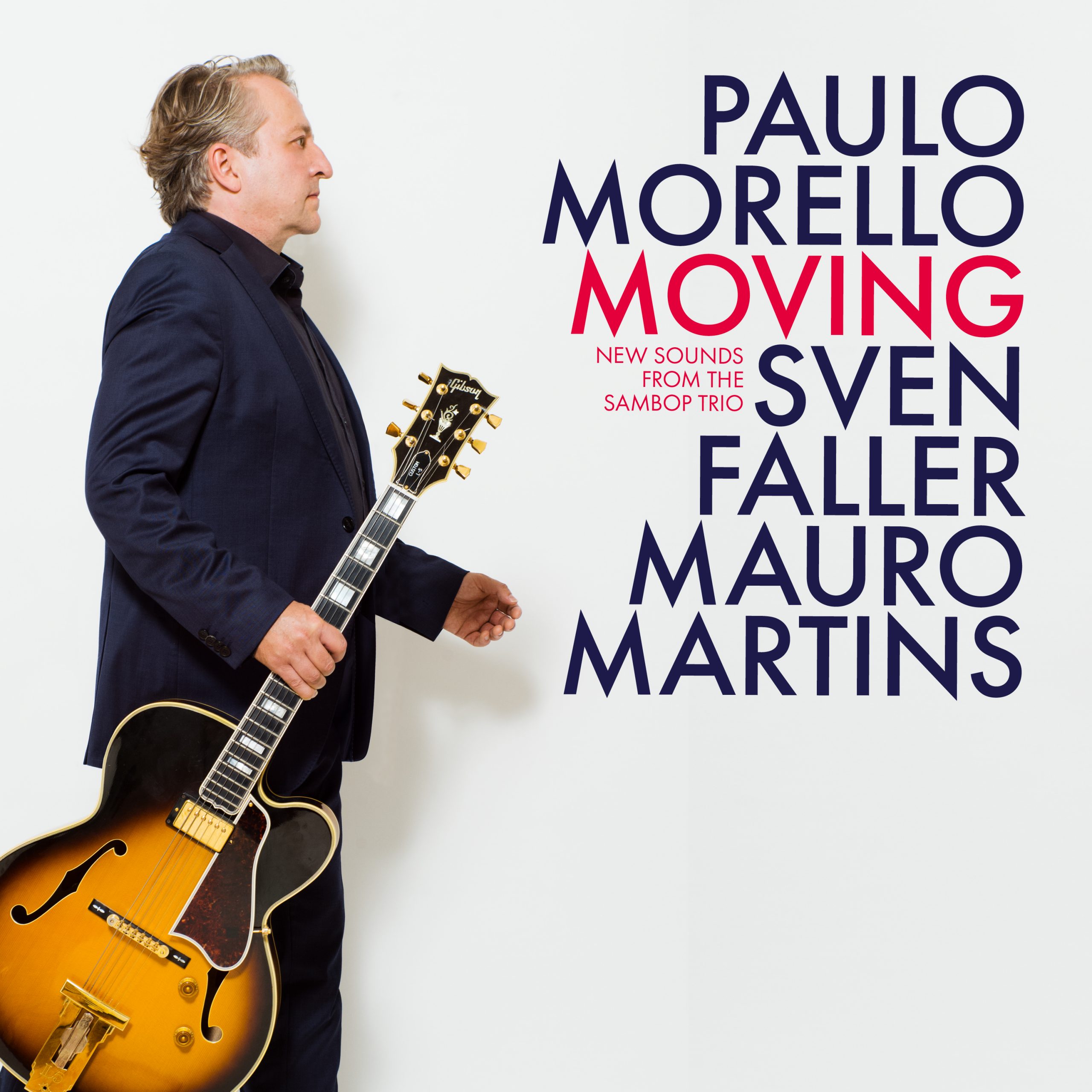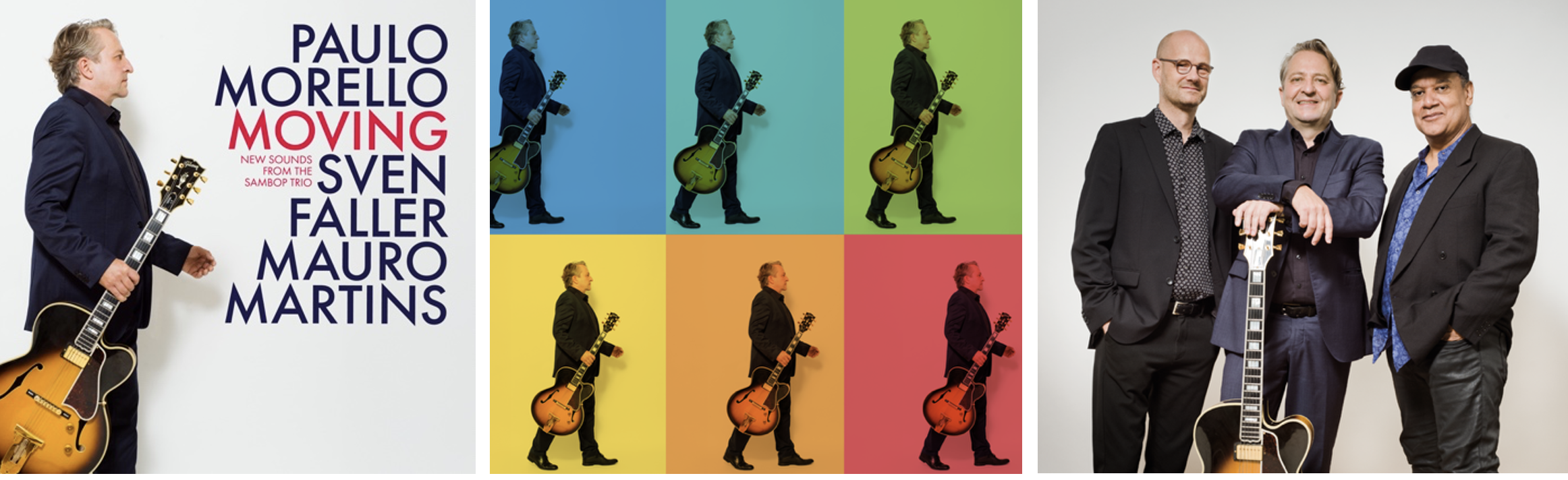
“Take your time” – this phrase could serve as an invisible motto for the album MOVING. That’s exactly how these recordings came into being: without haste, with time to breathe, mature and listen. Ten intense days in the studio, supported by a wealth of concerts beforehand, have fused guitarist Paulo Morello, bassist Sven Faller and drummer Mauro Martins into a single musical organism – one that confidently calls itself the Sambop Trio.
Here, the radiance of Brazilian rhythms meets the elegance of modern jazz. A trio that moves effortlessly between a driving choro, a funky octave groove and a bolero-tempo ballad – with the kind of natural ease that makes it feel as if samba, choro and bebop had always been destined for each other.
Christian Elsässer (Piano) – Niels Klein (Sax) – Tim Collins (Vibraphone) – Henning Sieverts (Bass)
Fabian Arends (Drums)
Life is change. At its best, it gives rise to inventive jazz—as in Christian Elsässer’s new album The Move.
After a long phase working primarily as a composer, arranger and conductor for big bands and orchestras Christian Elsässer reveals a particularly intimate, chamber-like side on his new quintet album.
„While working on the music a lot of changes were about to happen in my personal life. The most crucial one was that my wife and I decided to leave Munich behind and create a new home for our family in the country-side.“ This emotional shift—filled with excitement, nostalgia, and the magic of new beginnings—runs like a thread throughout the album.
The choice of musicians and the associated instrumentation had a decisive influence on the realization of the compositional ideas. „For this recording I invited four long time friends with whom I have worked in various musical contexts – but never in exactly this lineup. When mentally assembling the band’s sound, I was imme-diately fascinated by the many colorful possibilities that arose from the combination of instruments.“
With The Move, Christian Elsässer creates a musical diary of change: a journey full of farewells and new be-ginnings, shaped by the growth of a family and the quiet yet profound changes that life brings over time. It explores movement in its deeply rooted facets—from the life-changing experience of relocating to a new place to the small and significant steps toward a nature-oriented way of life. Pieces like Birds, Morgentau, and Wie-genlied create sonic landscapes drawing on the rich palette of modern jazz. Other original compositions, such as Kanon and Circles & Corners, reflect Elsässer’s inventive structural concepts, already hinted at in their titles. Likewise, Short Story No. 2 follows a self-imposed challenge: to fit entirely on a single sheet of music—quite a contrast to his large-ensemble arrangements, which typically require dozens of pages.
Christian Elsässer is one of the most versatile voices of contemporary Jazz in Europe. He is regularly commissi-oned by top ensembles such as the Metropole Orkest (three-time Grammy winner), the Scottish National Jazz Orchestra, and all four German radio big bands (WDR, HR, NDR, SWR). He has worked with a wide range of acclaimed artists such as Dee Dee Bridgewater, Kurt Elling, Aaron Parks and Mike Stern. Elsässer is also a pro-fessor of Composition and Jazz Piano at the University of Music and Performing Arts Munich.
The name says it all! The trio sees itself in the best sense of its name as a traveling ambassador of acoustic world music—beyond conventional genre boundaries. Their playing combines elements of French valse musette, jazz, Brazilian samba, and bossa nova, the melancholic bandoneon sounds of Astor Piazzolla, and the rhythmic richness of the Balkans to create a multi-layered soundscape. Despite the musical diversity, the three musicians always retain an unmistakable signature. Their arrangements never seem collage-like, but develop with natural flow, esprit, and personal expression.
Vladislav Cojocaru (accordion), Vlado Grizelj (guitar), and Giorgi Makhoshvili (bass) come from Moldova, Bosnia-Herzegovina, and Georgia. Due to the musicians’ biographical backgrounds, their phrasing is interwoven with Eastern European embellishments and lyrical melodies.
The pieces, penned by the ensemble members, tell of independence, joie de vivre, and inner agility. Delicate and daring one moment, explosive and full of emotion the next—the sound spectrum is wide. Pride and down-to-earthness are just as present as the joy of virtuoso playing. At the center are the elegance of French musette and the rhythmic sophistication of jazz.
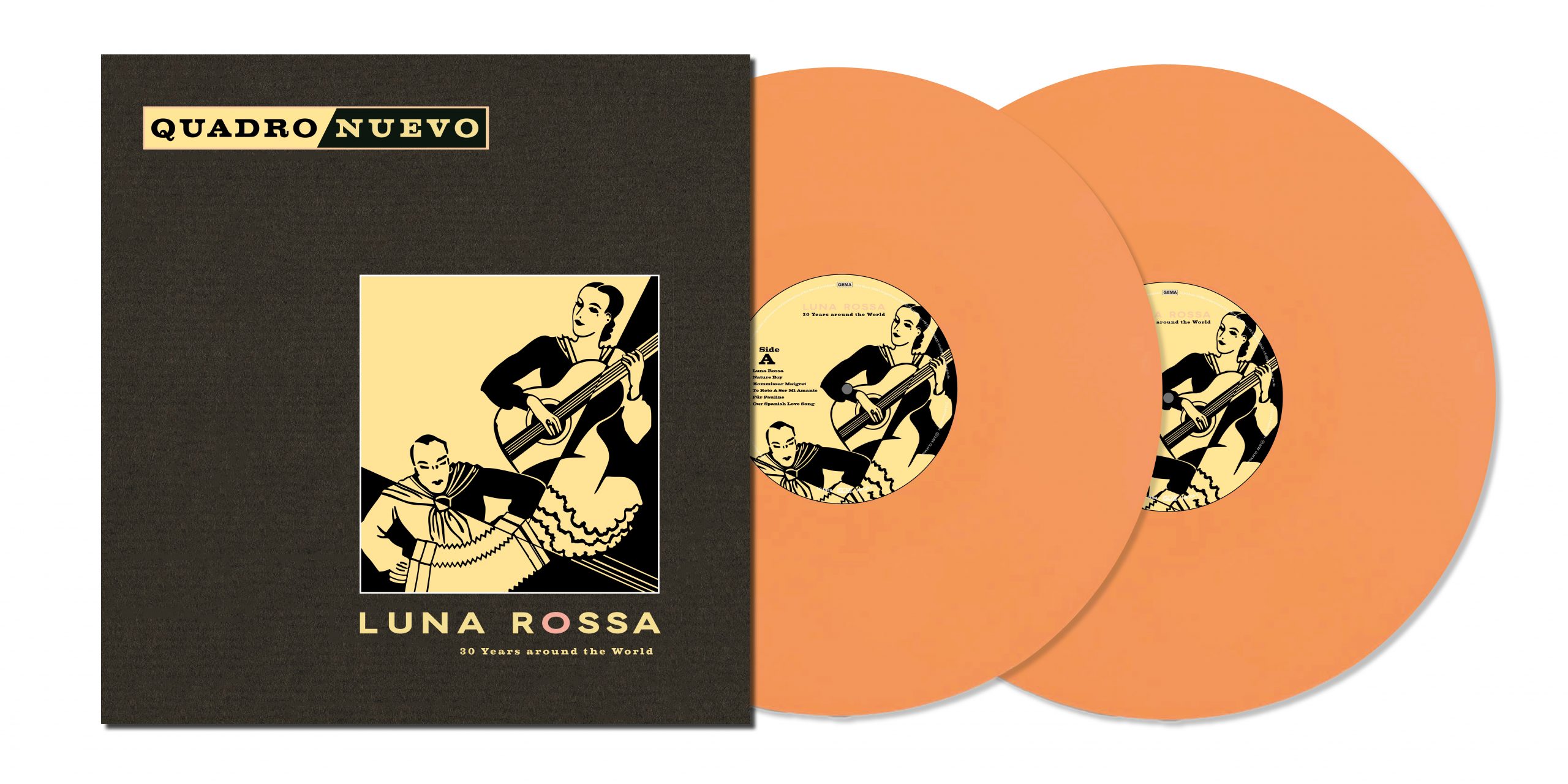
Inside the Island – Quadro Nuevo on the island of Samos
It is a journey inward – not only geographically, but musically and spiritually as well. Inside the Island, the new album by Quadro Nuevo, will be released on October 24, 2025, by GLM Music, distributed by Edel (LP/CD) and Kontor New Media (digital). More than a collection of pieces, it is a musical travelogue, born on the Greek island of Samos. There, where waves, light, and sun shape the landscape, where ancient villages slumber in the hills, and a kafenion remains a meeting place for locals, the four musicians withdrew to create music scented with lemons, wild rosemary, and the cheerful melancholy of the South.
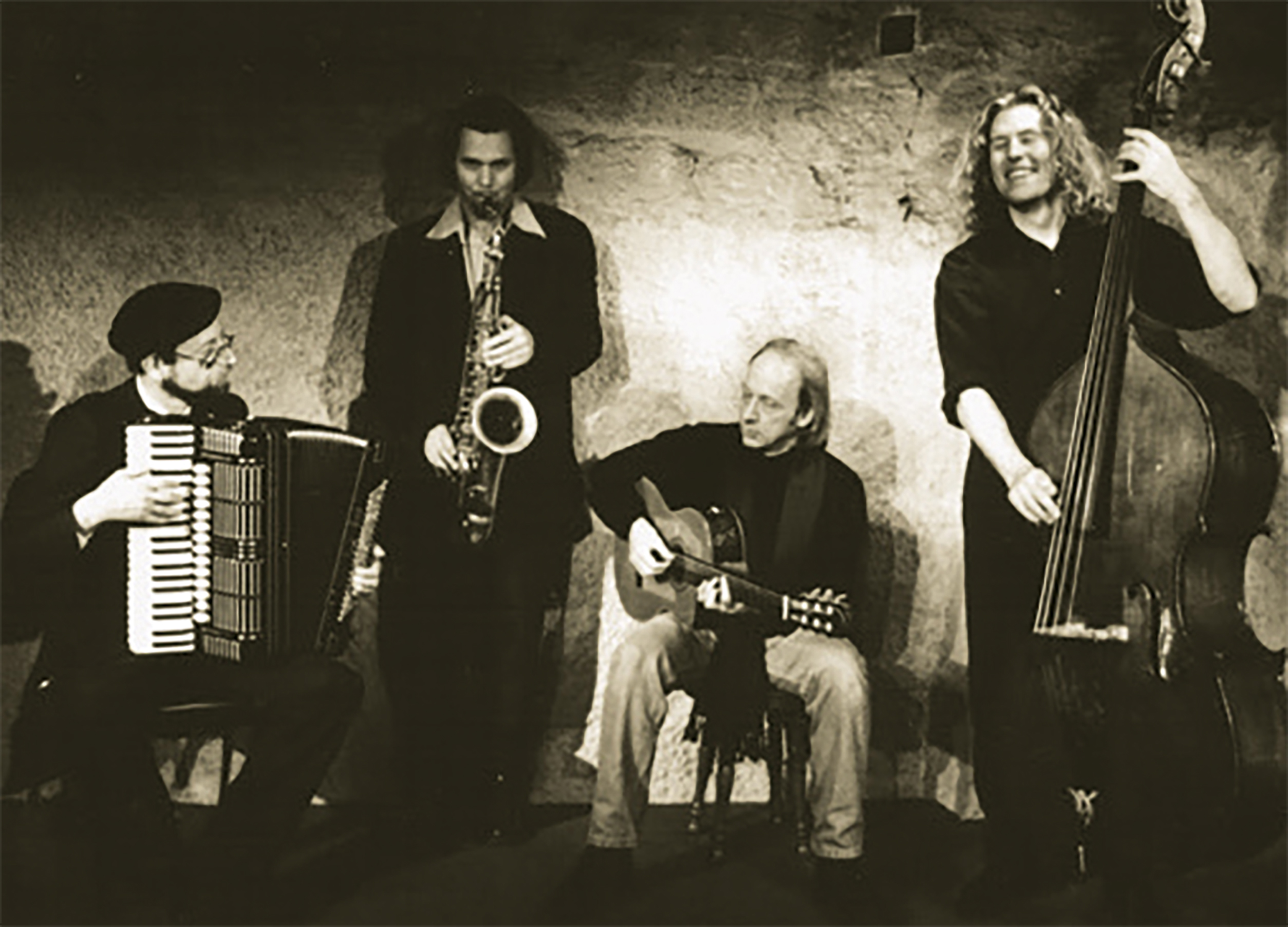
Quadro Nuevo consists of Mulo Francel (tenor saxophone, clarinet, mandolin, whistle), Andreas Hinterseher (accordion, bandoneon, vibrandoneon), Didi Lowka (double bass), and the ensemble’s newest member, guitarist Philipp Schiepek. Together, they embark on a search for the “simple life,” an unhurried, contemplative way of life that heightens awareness of what truly matters. Far from tourist crowds and global politics, they create music that is warm, elemental, and timeless – born from the openness and serenity of the Aegean.
On his new album “The Afrodub Experience,” multi-instrumentalist and producer Umberto Echo takes us on a journey through time and space across four continents. With numerous collaborators, he explores 50 years of Afro-Caribbean music history.
The starting point is the Afrobeat of the 1970s. In the Berlin project “Afrobeat Academy” of the late 2000s, Umberto found inspiration through collaborations with original musicians from Fela Kuti’s band “Africa 70.” He began to fuse their music with dub and reggae. Originally intended as Umberto’s second album, the project continually takes new twists and turns, becoming a journey you might not want to end. 18 years later, “The Afrobeat Experience” is now released as Umberto Echo’s twelfth studio album on GLM Global Music and Oneness Records.
Similar to how dub emerged from the roots reggae of the 1970s, Umberto Echo approaches Afrobeat with its many rhythmic layers by isolating and re-melding musical levels, thus opening up a view of deeper sonic elements. Various protagonists join him on this journey, who significantly shape the album. Musicians from Nigeria, Zimbabwe, Burkina Faso, Mozambique, Ghana, and Guinea-Bissau enrich the spectrum, as do singers from Jamaica and Barbados. Jazz musicians and co-producers from New York to Hamburg to Melbourne inspire each other and give the project a unique character over time.
Countless sessions yield a vast pool of ideas and songs, some of which have already been used on recent albums, others discarded. Experimentation, remixing, expansion, and shortening take place. Antique tape machines, digital effects from the 1980s, and a mixing console from the 1960s are coupled with state-of-the-art computers. Older songs are completely reworked years later, while others are conjured up at the very end. Historical and obscure instruments meet software and samples, and musicians who were still schoolchildren at the beginning of production ultimately participate.
What rightly sounds like chaos and eclecticism has been continually organized by Umberto over the years and, with the help of his co-producer Silvan Strauss, only completed when everything came together harmoniously. On the ten resulting songs on the album, Umberto Echo shares his “Afrodub Experience,” which can be enjoyed for years to come, discovering new details every time.