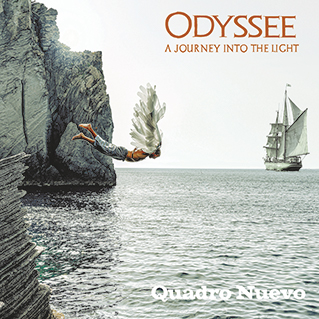
Quadro Nuevo sails through the myth-ridden world of the Aeolian Islands in a large ensemble of artists.
In the encounter with Odysseus, Jason, Penelope, Athena, Sirens and other godlike figures, music full of rhythmic power and archaic timbres unfolds.
An album that is definitely different from all previous ones by Quadro Nuevo.
You’ll find hymnal improvisations alongside a driven ska groove, a sea bossa nova in early-season 5/4 time as well as a heartfelt lullaby for the fallen Icarus or an earthy ballad for the waiting Penelope.
There were inspirations.
Odysseus’ swashbuckling journey back to the old homeland.
Aeneas’ search for a new home.
Icarus’ flight and flight to freedom.
Jason and his Argonaut companions hunting for the Golden Fleece as a symbol of power, wealth, luck, or even wisdom.
The great journeys, interwoven a thousand times with the gods and myths of antiquity, became central epics of Western culture.
What relevance do they have in our modern society?
Do their settings offer more than sunny bathing, Mediterranean food and a few temple remains?
Can we even derive references to current issues such as migration, climate change or the littering of the oceans?
An adventurous collective around the band Quadro Nuevo traced these questions.
The answers should be neither scientific nor political. But artistic.
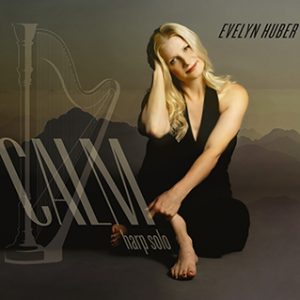
CALM is an album that puts the harp in the center, gives it space to sound and breathe.
With CALM, Evelyn Huber has succeeded in creating a special sound experience – devotional and atmospheric-meditative – this is how the mood of Huber’s playing on her new album can be described.
The pure harp sound, crystal clear and filigree recorded, make these recordings something special: Created from the silence of the Corona lockdown at home in their own acoustically genial dressing room sound studio equipped with the finest microphones.
For too long, music in Germany has been pigeonholed. In serious and light music, in composed classical music and improvised jazz, in all kinds of Anglicisms from traditional-roots-music to modern-contemporary-avantgarde. The acoustic guitar often enough fell through the cracks and ended up in its own niche, a parallel world of organizers. All this is the only possible explanation for the fact that the 76-year-old Carlos Barbosa-Lima is still hardly known in this country. After all, he is not someone who would have served the pigeonholes, but a man who is a legend not only in the musica popu-leira of his native Brazil, but also in the Latin jazz of North America and in the worldwide gi-tarrist scene. He was considered a child prodigy in his hometown of Sao Paulo as early as the 1950s, made his debut at the age of 13, left for the world at 16, worked in Spain with the giant of classical guitar Andrés Segovia and later in New York – for a long time his “home base” – with Antonio Carlos Jobim, the inventor of bossa nova. Who has recorded more than 100 albums to date, in various genres, but always marked by his own unique, Brazilian-based style. And who has given concerts in the most important halls in the world, for example at the age of 21 for the first time in Carnegie Hall.
Kreusch and Barbosa-Lima are therefore the perfect team to make even the best-known earworms of Latin American music such as the title-giving “El Manisero” by Moisés Simons, “Rosa” by the Brazilian predecessor and choro grandmaster Pixinguinha or Manuel María Ponce’s “Estrellita” sound completely new, fresh, lively and with a very personal touch. Which is also due to the fact that Barbosa-Lima primarily selected pieces with which he has long maintained a strong individual relationship. To the famous “Manhã de Carnaval”, for example, one of Luiz Bonfá’s hits from the time when the very young Barbosa-Lima was personally introduced to the then star. Or, of course, to the Antônio Carlos Jobim songs “Canta Mais” and “Por Causa de Você,” which sprang from their joint work. Finally, it is no coincidence that three tracks on the album are by Alberto Ginastera: The collaboration with the Argentine composer was arguably one of the most satisfying and successful for Barbosa-Lima, culminating in Ginastera’s 1976 Sonata op. 47 dedicated to him, which became a landmark in classical guitar literature.
What happens when a classical clarinetist, a representative of new music on the accordion and a jazz bassist join forces? The result is called Firasso – the three musicians of this post-genre group have developed an earthy, gripping musical language, passionate, dynamic and rich in contrasts. The trio presents sophisticated original compositions that draw on the musical vocabulary of the tango and klezmer tradition, Balkan music and French musette. This sounds sometimes fiery and blazing, sometimes refreshing like a downpour in summer, sometimes intense like a strong ristretto.
For the musicians of Firasso, music has a lot to do with life. They tell stories of a walk through the autumn leaves, of chewing gum stuck under the heel, of uncertainty and fear in Corona times. Life is everything: exciting, sad, angry, cheerful, if you set your antennas to receive…